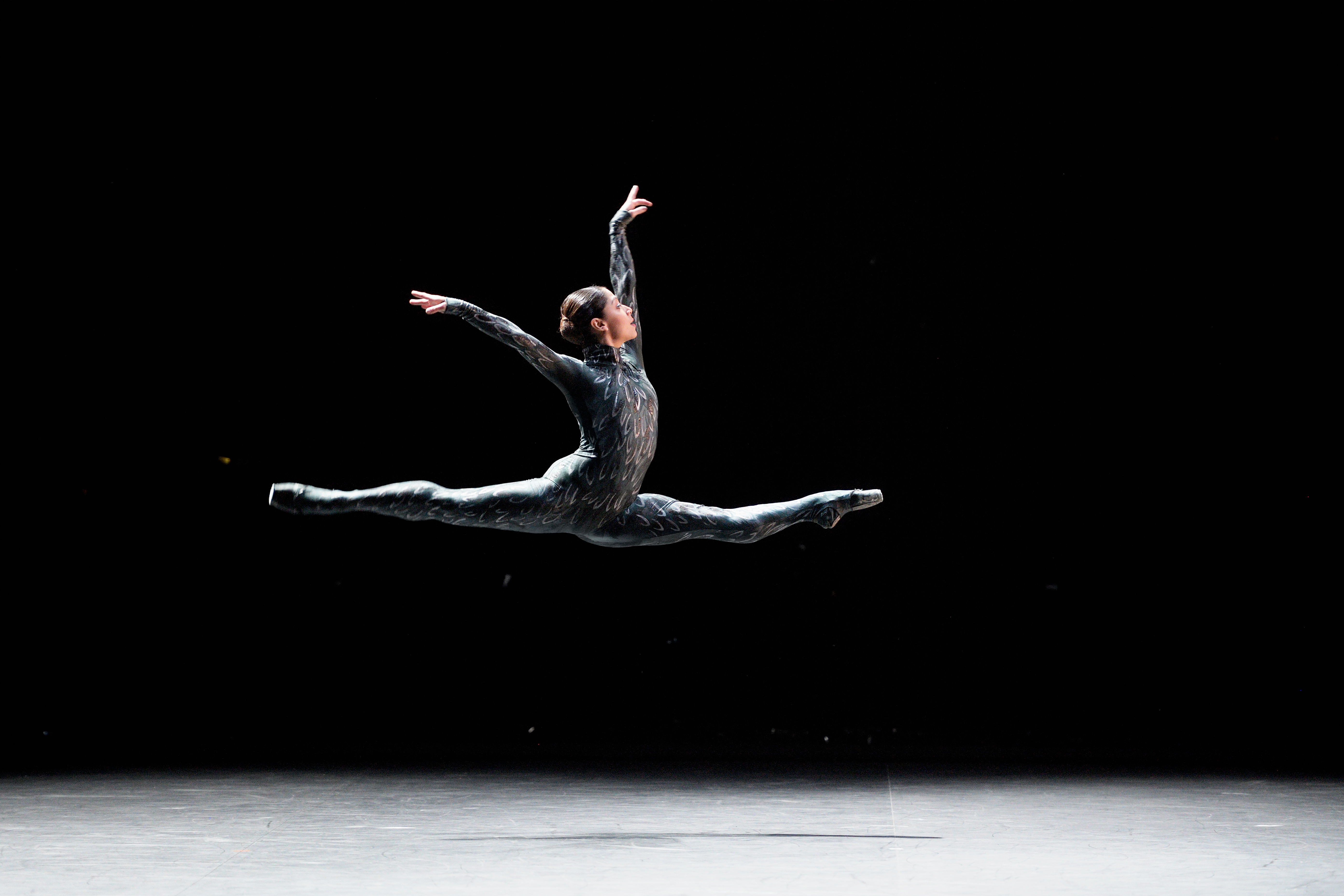
Earlier this month, on 3rd May at the Royal Opera House in Covent Garden, London, a rare & unusual event took place.
Insights: In Conversation with Akane Takada and Ryoichi Hirano
Principal dancers Akane Takada & Ryoichi Hirano spoke about their lives and careers, but unusually, the event was presented in Japanese. This was eagerly anticipated by the many Japanese ballet fans living in the UK, and the event was sold out.
Ballet News has the inside scoop, courtesy of Mayuko Akiyama, a Japanese translator and ballet aficionado.
A former first soloist of the Royal Ballet, Hikaru Kobayashi led the conversation. She isn’t a professional interviewer, but she made the conversation more intimate as she has known Akane & Ryoichi for a long time as a former colleague of the company. It was great to see them together on Friday, as Ryoichi Hirano and Akane Takada had just danced together in Romeo and Juliet earlier in the week.
I am sure that both dancers would not have any problems doing this event in English as they have been living in this country from a young age. However, it was a treat for Japanese fans as some references in the conversation could only be understood by Japanese audience members. Also, their individual characters seem to reveal themselves better in their native language.
Ryoichi Hirano is from Osaka where historically many comedians come from, and some of his answers were very witty and his Osaka accent made it even funnier. He also said himself that a comical character like in Don Quixote comes naturally to him. Akane Takada sounded slightly shy, but I felt that her passion for the ballet was second to none.
One of the episodes that made us laugh was when they are preparing for the ballet La Bayadere. Coincidently, they are both thinking in the old Samurai language in their heads in order to conjure up the ancient era. It was really funny to imagine that when they are dancing this beautiful ballet, Samurai in funny old kimonos and hair styles are running around shouting in a rather comical Samurai language in their heads.
Not surprisingly, they are truly international, so they said that they are representing Royal Ballet dancers rather than Japanese ballet dancers. They also said, they are aware that there are sad and terrible conflicts in the world, but they would like to be good ambassadors and that they are citizens of the world. There are so many nationalities in the Royal Ballet and they are trying to create great art together.
Both Ryoichi Hirano and Akane Takada joined the company on a Prix de Lausanne scholarship from Japan. Both of the dancers seemed to have had no issues adjusting their lives to the Royal Ballet way. Ryoichi Hirano said that the Royal Ballet is the real thing, so that there was no question that he had to follow that way. I really liked his straightforwardness.
The work ethic for both of the dancers is very strong, as I had expected, but interestingly, their characters are very different. While Ryoichi Hirano seems to be fairly laid back, Akane Takada appeared to be slightly sensitive. When they have three different rehearsals in one day, Ryoichi Hirano said that it wasn’t a problem adjusting to different roles once he hears the music, however Akane Takada suggested that it takes a bit of time to adjust. For example, when she rehearsed as Juliet, she sometimes puts too much of herself into the characters and feels uncomfortable for a while.
The method of relaxing also showed their differences : Ryoichi Hirano is more active, liking carpentry, music, cooking and walking, but Akane Takada likes to watch animation and to play games at home. Ryoichi Hirano said, even on the day of the performance, he is usually pretty active, going to museums etc. and the other day, he went to the Planetarium in Greenwich after the practice before the performance. Contrastingly, Akane Takada went back home to relax before the performance.
It was interesting to hear that they are not that keen to see performances of other companies, but they do watch their colleagues dancing and often became very emotional, and they hinted that they even cry sometimes. Their camaraderie seems to be stronger than I had imagined. Actually, there were some younger Japanese dancers in the audience.
They suggested that there were occasions when they were not happy about their performance, but that’s why they work hard to perform their best. Therefore there were no regrets.
When they were asked if they have a plan for after their ballet lives, both dancers said very clearly that they are dedicating their lives to the ballet now and living for today. So they do not have a future plan. They will think about it when the time comes. It was refreshing to see these two dancers focusing completely on one thing they love and have passion for.
Mayuko Akiyama
Mayuko Akiyama is an experienced translator/interpreter (English – Japanese) who says, “I fell under the spell of ballet when I was twelve while reading a Japanese ballet manga called ‘Swan’ by Kyoko Ariyoshi. Since then, I have seen many ballet performances including those of The Royal Ballet, Bolshoi Ballet, Paris Opera Ballet, American Ballet theatre and Cuban National Ballet.”
Mayuko Akiyama runs her own translation business and can be contacted by email @ mayuko@akiyamaenterprises.com